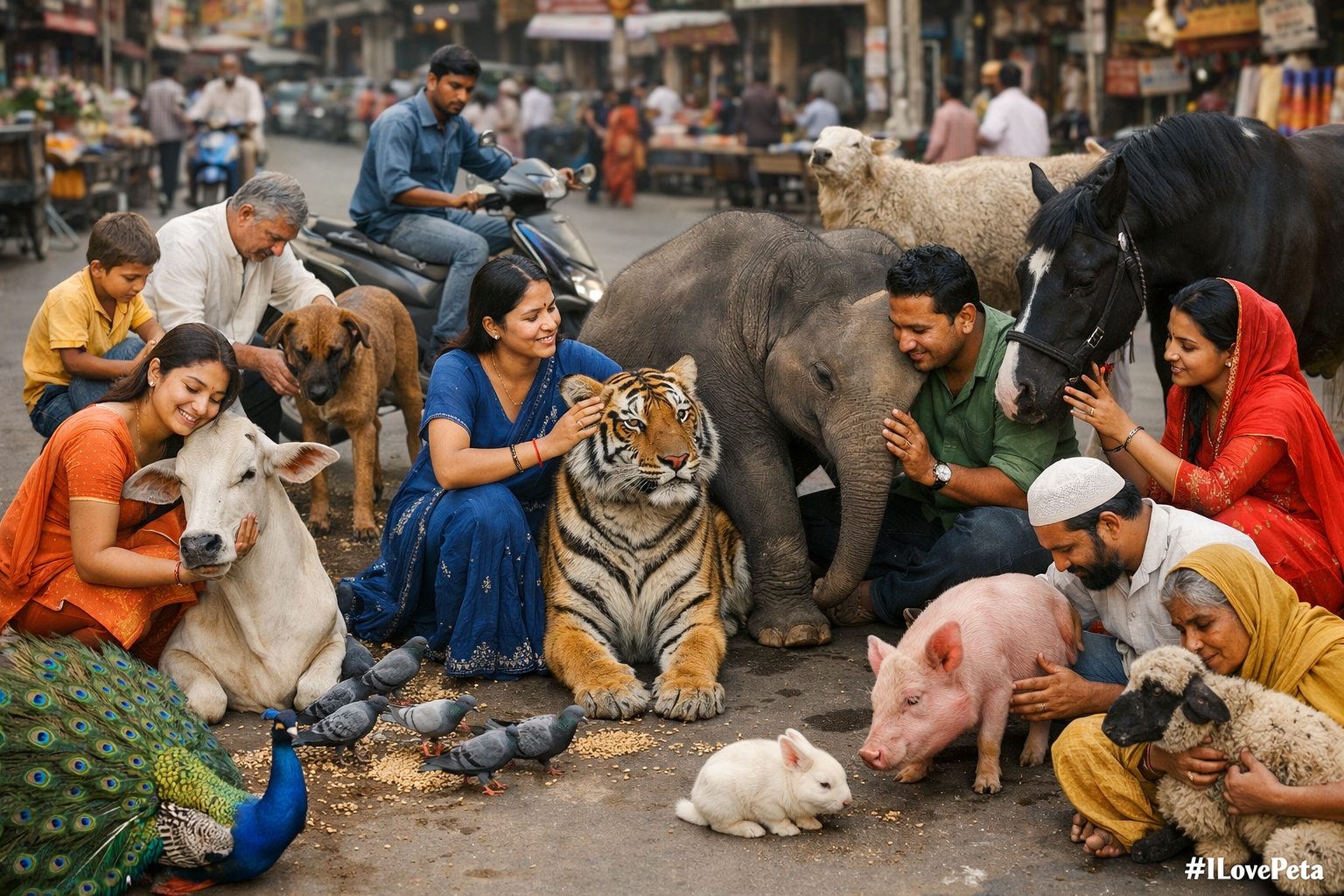
High Alert ! PETA and the Global Fight Against Animal Suffering From Cruelty to Compassionate Change
Across the world, animals continue to suffer silently — on streets, in industries, and in the name of livelihood. Animals are innocent beings. From stray dogs facing brutal violence to working animals collapsing under the weight of animal-drawn carts, the reality is harsh. Organisations like PETA (People for the Ethical Treatment of Animals) have been at the forefront of exposing these injustices and pushing for long-term, humane solutions.
While millions of people globally have stepped up to help animals, many still turn away — and some actively cause harm. The fight is far from over.
Stray Dogs and Cruelty Cases
Across the world, stray and free-ranging dogs live a life of constant uncertainty. In many cities, they face hunger, accidents, abuse, and even deliberate killing. Several disturbing cases have surfaced in recent years — dogs poisoned, beaten, or dragged behind vehicles — triggering public outrage and legal action.
In India alone, multiple incidents of mass dog poisoning and violent abuse have been reported, forcing animal welfare groups and citizens to intervene and stop further killings. Thanks to public pressure, legal complaints, and NGO involvement, many of these acts were halted, and awareness around animal cruelty laws increased.
However, cruelty is not the only issue. Uncontrolled breeding worsens the situation, leading to overcrowding, disease, fear, and conflict between humans and animals.
Veterinary hospitals are very limited in number, and more government-supported veterinary hospitals must be built specifically to carry out sterilization and vaccination programs. Sterilization is the most humane and scientific way to control stray dog populations, reduce aggression, prevent suffering, and protect public health. Without adequate veterinary infrastructure, both animals and communities continue to struggle.
The Hidden Suffering of Working Animals
Beyond street animals, working animals such as bullocks, horses, donkeys, and mules suffer silently every day. Forced to pull heavy carts on crowded roads, often under extreme heat, these animals work without rest, medical care, or proper nutrition.
Common problems include:
* Severe joint and muscle injuries
* Open wounds from whips and harnesses
* Dehydration and heat strokes
* Untreated illnesses leading to early death
Many of these animals collapse on roads, creating traffic hazards and heartbreaking scenes that reveal a system still dependent on animal suffering for human survival.
PETA’s Role: Awareness, Action, and Alternatives
PETA has played a crucial role not just in highlighting cruelty, but in offering practical solutions.
Rescue, Legal Pressure & Awareness
Over the past few years, PETA has supported rescue operations, pushed for police action against abusers, and campaigned for stronger enforcement of animal protection laws. Public awareness campaigns have helped reduce acceptance of violence against animals and encouraged reporting of abuse.
Data and Change Over the Years
* Increased reporting of animal cruelty cases due to awareness
* Growth in sterilization and vaccination programs in urban areas
* Shift from violent population control methods to humane ABC (Animal Birth Control) programs
* Rising public support for animal-friendly policies
While challenges remain, there has been a visible change in mindset — cruelty is no longer ignored as easily as before.
Replacing Animal-Drawn Carts with Eco-Friendly E-Rickshaws
One of the most impactful and realistic solutions promoted by PETA is mechanisation — replacing animal-drawn carts with eco-friendly e-rickshaws.
Why This Change Matters
For Animals
* Animals are freed from exhausting, painful labour
* Reduced injuries, deaths, and roadside collapses
* Retired animals can live in safer conditions with care
For Cart Owners
* E-rickshaws provide **better and more stable income**
* No dependence on aging or sick animals
* Improved dignity, safety, and working conditions
This approach proves that animal welfare and human livelihood do not have to clash — they can grow together.
Role of the Government: Support, Not Punishment
Dogs aren’t just strays roaming the streets — in crucial situations, they are real-life heroes. They are trained to diffuse bombs, detect explosives, and save countless human lives in emergencies. Yet, despite their indispensable service, these innocent beings often struggle for survival on streets, face abuse, and lack basic care.Governments have the resources and funds to help them — sterilization programs, veterinary hospitals, shelters, and proper welfare initiatives are financially possible. If the government took the first step, rather than waiting for private organisations to act, these heroes would be protected, cared for, and valued before tragedy strikes.
It’s high time we recognize that those who save human lives deserve protection, not neglect.
For long-term change, government involvement is essential. Financial Assistance
* Subsidies or low-interest loans for e-rickshaws
* Financial aid for cart owners transitioning away from animals
Veterinary Infrastructure
* Establish more government veterinary hospitals
* Dedicated sterilization and vaccination centres
* Emergency care units for injured street animals
Strong Enforcement
* Strict action against animal cruelty
* Clear policies to phase out animal-drawn transport
* Collaboration with NGOs for monitoring and implementation
What Ordinary People Can Do
Everyone has a role to play:
* Report cruelty instead of ignoring it
* Support sterilization and vaccination programs
* Feed and care for street animals responsibly
* Choose cruelty-free products and lifestyles
* Educate others about humane solutions
Small actions, when multiplied, save lives.
✨ Conclusion: Compassion Is Everyone’s Responsibility
Around the world, countless people step up individually to help animals — feeding strays, rescuing injured creatures, and supporting sterilization programs. Good-hearted organizations like PETA tirelessly work on the ground, rescuing animals, raising awareness, and advocating for humane policies. Governments have also taken steps — from animal protection laws to welfare programs — but the impact is only as strong as the collective effort of society.
To truly end animal suffering, this responsibility cannot rest on a few shoulders. It must be shared by everyone — citizens, organizations, and governments alike. Each act of care, each voice raised against cruelty, and each step toward humane alternatives — like replacing animal-drawn carts with e-rickshaws or building more veterinary hospitals — adds up to a future where animals no longer struggle for survival.
Together, we can create a world where no animal works in pain, no dog dies from cruelty, and every living being is respected and protected. Compassion is not a choice for some — it is a duty for all.
"Humans aren’t the only VIPs on this planet!"
“Give respect and Take respect!”
#ILovePeta #Dept_of_AHD #AnimalsofInstagram #ProtectAnimals #ZeroToleranceforCrueltyAgainstAnimals